
Buying cuttings
Fig cuttings, sized for home growers.
Dormant wood or rooted starts — know what you are ordering before you pay. Straight talk from the farm, not catalog fluff.
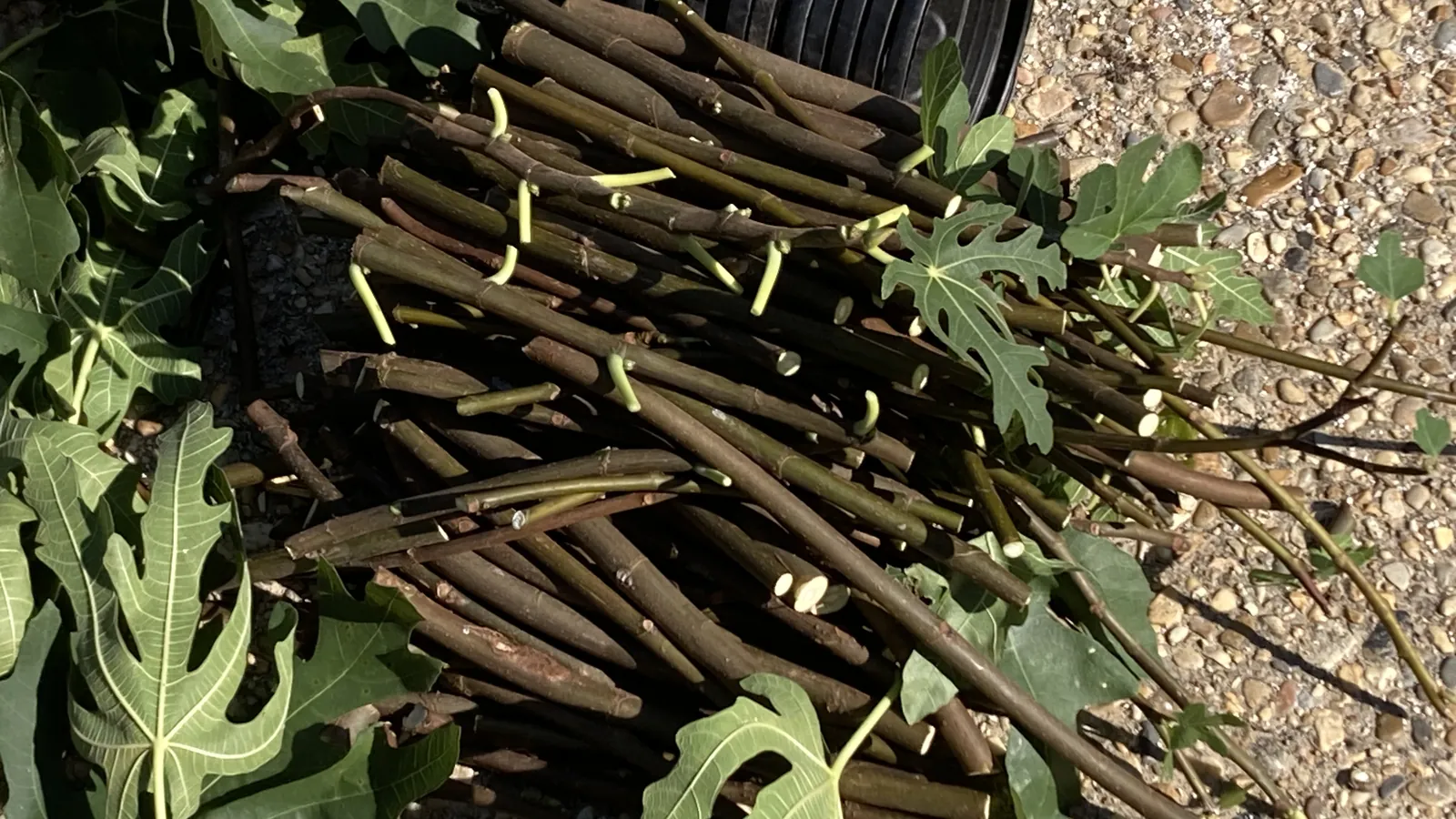
What a fig cutting actually is
A cutting is a section of fig wood meant to root into a new plant. That sounds simple, and it is — until a listing mixes dormant sticks, callused wood, and already-rooted plants without saying which you will get. Ask before you pay.
- Dormant wood: bare sticks cut in the cool season. No leaves. Ships light. Needs your rooting setup.
- Callused wood: base has started to heal or show early root initials. Still not a finished plant.
- Rooted: already holding media with roots. Ships heavier. Closer to a young tree, different price and season window.
- Young tree: larger plant in a pot or bag. Fewer units, higher ship cost, less rooting work on your end.
Node count, length, and wood quality
We size cuttings by usable wood, not by wishful inches. A practical home-grower stick often runs roughly pencil-thick with several nodes — the swollen buds along the stem where leaves and roots can emerge. Too thin and it dries fast. Too fat and woody and it can be slower to wake.
- Ask for approximate length and node count when a listing is vague.
- Prefer clean cuts and firm wood. Soft, dark, or sour-smelling wood is a hard pass.
- Current-season or well-hardened wood roots more predictably than old, brittle sticks.
- Named cultivar beats “assorted” if you care about flavor or climate fit.
What to ask before you buy
A short question saves a wasted season. We would rather answer a plain email than pretend every stick is identical.
- Exact cultivar name (and whether it is own-root).
- Dormant wood vs rooted vs young tree.
- Approximate nodes / length and how many sticks per order.
- Ship week window for your region — not a fake calendar date.
- Your USDA zone and whether you can root indoors if spring is late.
Honest expectations
A cutting is not a fruiting tree on day one. Plan on callus and roots first, then a first growing season before you judge the variety. We do not invent yield promises or “guaranteed fruit year one.” Request availability with your zone and preferred cultivars — we answer with what is in stock and when it can move.
Arrival day checklist
When dormant fig cuttings land, open the box the same day. Check labels against your order. Mist lightly if wood looks dry on the surface, then stick or store cool and humid for a short hold — do not leave sticks in a hot truck-box on the porch overnight.
- Photograph the open box if anything looks off.
- Separate cultivars immediately so labels cannot mix.
- Move straight into your rooting setup or a short cool hold.