
Variety education
Match the fig to your climate and kitchen.
Flavor and use matter. So does whether the plant will ripen where you live. Start with your season, then pick cultivars.
Climate fit first
Some figs need a long warm season to ripen main-crop fruit. Others set an early breba crop or handle cooler summers better. We do not invent hardiness numbers here — start with your USDA zone, frost dates, and whether summers actually get hot where you live, then pick cultivars.
- Short season / cool summer: lean toward earlier-ripening types and containers you can place in the warmest spot.
- Hot long Southern season: wider cultivar range, including later main-crop types.
- Containers: easier to move or protect when winters turn sharp.
- Ask growers in your zone what actually ripens for them — forum hype travels farther than fruit does.
Flavor, use, and honest notes
Good notes say fresh eating, drying, or jam — and something about texture or ripening habit. If a listing only says “great fig,” ask. Collector types (variegated foliage or fruit, rare named lines) are fine hobbies; they are not automatically the best eating fig for your yard.
- Fresh eating: berry, honey, or jammy notes — ask what the seller actually tastes.
- Drying: denser flesh that holds up on a rack or dehydrator.
- Breba vs main crop: know which crop you are banking on in a short season.
What to ask before you buy a variety
Tell us your zone, whether you grow in ground or pots, and whether you want fresh fruit, drying, or a collector variegated type. We answer with what we actually have, not a catalog fantasy.
- Named cultivar spelling (synonyms are common — confirm).
- Own-root vs grafted, if that matters to you.
- Typical ripening window in a climate like yours (honest range, not a guarantee).
- Whether stock is dormant wood, rooted, or a young tree.
Labels that survive a season
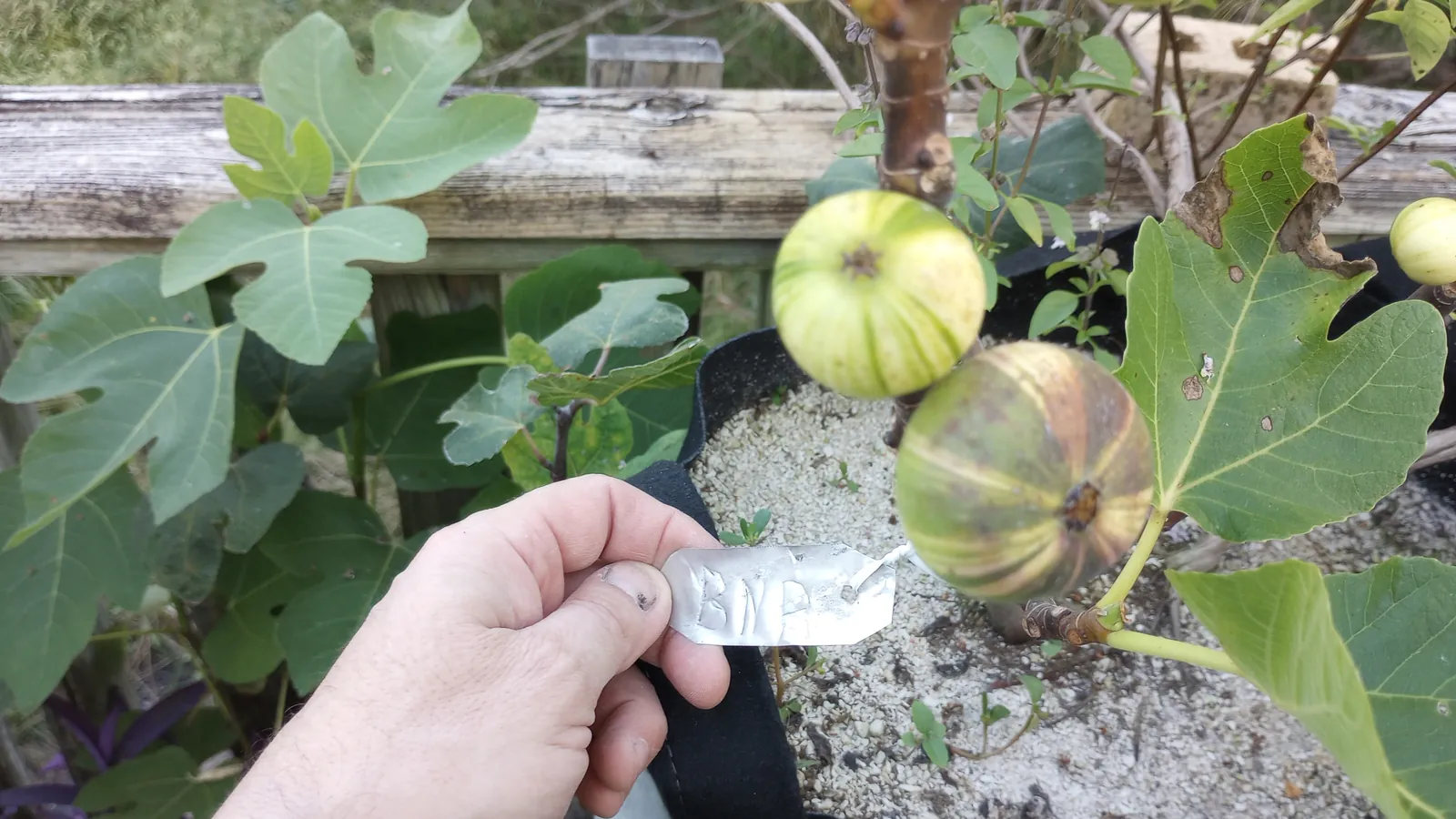
Marker on nursery tape fades. Embossed metal or UV-stable tags keep a cultivar name honest after one summer on the deck. If you trade or gift wood later, the label is the difference between a known fig and a mystery stick.
Collector types vs backyard eaters
Variegated fruit and foliage (think striped figs with a durable metal tag) are fun and photograph well. They are still figs — they need sun, drainage, and honest season length. If your priority is a bowl of ripe fruit for the table, say so when you request stock; we will steer you toward what we grow for eating, not only what looks rare.